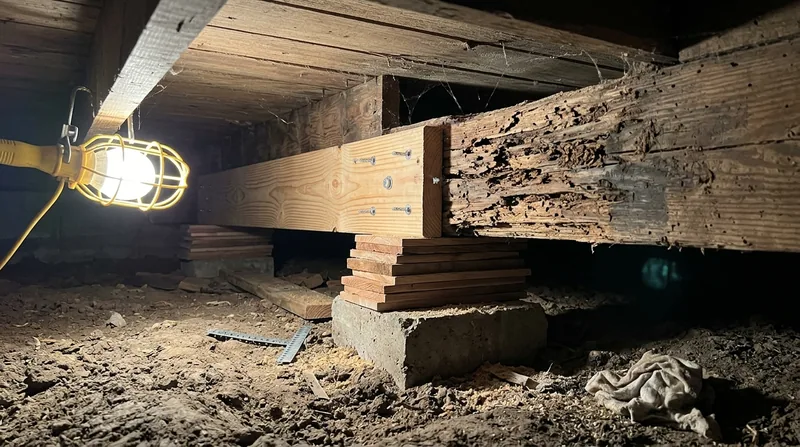




Floor Joist & Subfloor Repair in Brownsville addresses one of the most common structural problems in our older homes: sagging, bouncy, or soft floors that signal damage to the wood framing below. Brownsville's pier-and-beam cottages from the 1920s-40s, raised wood-frame homes on delta clay, and even some mid-century ranches sit on foundations that shift with the subtropical climate, and the wood joists that carry those floors face relentless moisture from our humid air, tropical storms, and the salt-laden Gulf breeze. Termites, wood rot, and foundation movement work together to weaken joists and subfloor sections, and the longer the problem sits, the more of the structure it compromises. We sister compromised joists to sound wood, replace sections that have lost their strength, and rebuild subfloor where needed, restoring level and stability before finishes go back down. This repair work is often far more cost-effective than replacing an entire floor system, and it stops the problem from spreading deeper into your home's frame.
Why Floor Joist & Subfloor Repair Matters in Brownsville's Historic and Older Homes
Brownsville's housing stock tells a story of the Rio Grande delta's geology and weather. Our oldest neighborhoods feature 19th-century brick townhouses and 1920s-40s Spanish Revival stucco homes with clay-tile roofs, many sitting on pier-and-beam foundations that rest on the heavy, shrink-swell clay of the delta. Piers shift during droughts and after tropical downpours, and that movement puts uneven loads on joists. Meanwhile, the wood never fully dries in our subtropical humidity, and the combination of moisture, termite activity, and salt air attacks the sill plates and rim joists first. Sagging floors are often the first sign that damage has already started.
- Termite-damaged joists lose load capacity gradually and can fail suddenly if too much wood is consumed.
- Moisture from standing water in crawlspaces after storms causes wood rot in sill plates and joist ends, weakening the connection to the foundation.
- Clay shrinkage and expansion from seasonal moisture cycles lifts and settles piers unevenly, creating dips and bouncy spots in floors.
- Soft or rotted subfloor sections create hollow spots and can hide advancing damage in the joists below.
Catching joist and subfloor damage early prevents expensive structural failure and keeps your home level and safe.
Key info: Brownsville's homes sit on clay that shrinks and swells with rainfall and drought. This movement is normal, but it stresses floor joists and can open gaps between piers and beams. A floor that bounces or sags in one area often means a joist is damaged or a pier has settled. We assess the cause and repair what's salvageable, which is usually most of it.
For more on wood damage caused by moisture and pests, see our wood rot and dry rot repair service and termite damage repair pages. If you suspect termite activity, work from your own pest inspection report; we repair the wood damage they leave behind.
How We Repair Floor Joists and Subfloor in Brownsville: Our Process
Every floor repair starts with a clear diagnosis. We enter the crawlspace or look under the house to see the joists, check for soft or rotted wood by probing with a tool, look for termite mud tubes or galleries, and measure any sag or bounce. We photograph the damage and explain what we find before we quote the work. Once you approve, we shore up the floor with temporary support, remove or cut out the damaged section, sister a new pressure-treated or solid wood joist alongside the existing one if the joist is salvageable, or replace the entire joist if it is too far gone. We then install new subfloor plywood, screw it down tight, and level the floor before you finish it with new flooring.
- We inspect the crawlspace or pier-and-beam foundation and identify the cause of the damage (termites, rot, settlement, moisture).
- We shore the floor with temporary posts and beams to support the load while we work.
- We cut out rotted or termite-damaged sections and sister new framing or replace the joist entirely if the damage is extensive.
- We install new subfloor plywood, screw it down, and level the floor before finishes are installed.
The whole process typically takes one to three days, depending on how many joists need work and the size of the subfloor section.
Local example: A 1930s raised cottage on the north side of Brownsville had a soft spot in the kitchen floor. We found two joists with dry rot in the sill ends, where moisture from the crawlspace had wicked into the wood for years. We sistered new pressure-treated joists to both, replaced the subfloor section, and the floor was level and solid again. The repair cost about half what a full joist replacement would have, and the home is now structurally sound.
Learn more about our framing and structural carpentry work, which often runs parallel to joist repair in older homes.
Floor Joist & Subfloor Repair Methods and Approaches
| Approach | Description | Best for |
|---|---|---|
| Sistering | A new joist is bolted or screwed alongside the existing joist, sharing the load and reinforcing the damaged wood. | Joists with rot or termite damage in the outer sections where most of the wood is still sound; preserves the original framing. |
| Joist Replacement | The damaged joist is cut out and a new joist is installed in its place, with temporary support to carry the load during the swap. | Joists with severe rot, termite galleries, or structural failure; necessary when sistering is not an option. |
| Subfloor Patching | Rotted or water-damaged subfloor plywood is cut out and replaced with new 3/4-inch pressure-treated or exterior-grade plywood, screwed to the joists below. | Soft or spongy subfloor sections caused by moisture, without joist damage; restores a solid base for flooring. |
| Leveling and Shoring | Temporary posts and beams support the floor while we work; permanent adjustments to pier height or joist height restore level. | Floors that have sagged due to settlement or pier movement; essential for any joist repair to prevent new damage during work. |
Floor Joist & Subfloor Repair Cost in Brownsville: What to Expect
Floor joist and subfloor repair in Brownsville typically starts at $1,800 for a single damaged joist or small subfloor patch. The cost depends on how many joists need work, whether you sister or replace them, the size of the subfloor section, and how deep the damage goes. A two-joist repair with subfloor replacement usually runs $2,500 to $4,500. If multiple joists are damaged or the damage is spread across a large area of the crawlspace, the cost can climb higher, and we quote on site after inspection. Access to the crawlspace, the type of foundation (pier-and-beam versus slab), and whether the joists are pressure-treated or solid wood also affect the price.
The best way to understand your specific cost is to get a free estimate from us. We inspect the damage, explain what needs to happen, and give you a clear number before you commit. Most homeowners find that repairing joists and subfloor is far cheaper than waiting for the damage to worsen, which can eventually compromise the entire floor system and require much more expensive structural work. See our full pricing overview for more detail on how we calculate repair costs.
Floor Joist & Subfloor Repair Near Me: What Brownsville Homeowners Should Know When Hiring a Carpenter
When you hire a carpenter for joist and subfloor repair in Brownsville or the surrounding area, make sure you work with someone who can diagnose the problem accurately and explain the repair in terms you understand. A good contractor will enter the crawlspace with you, show you the damage, and tell you why it happened so you can prevent it in the future. Get at least two estimates so you can compare methods and price. Check references from past customers in Brownsville and the Rio Grande Valley, and ask specifically about floor repair work they have done. If your home is in a historic district or an HOA community, confirm that any repairs comply with local guidelines before work begins. Most structural joist work does not require a permit in Brownsville, but sistering or replacing joists as part of a larger project sometimes does, so ask your contractor to verify with the local building department if you are unsure.
- Verify that the contractor is fully insured and can show a certificate of insurance before work starts.
- Ask for references from Brownsville and nearby cities like Harlingen, San Benito, and Los Fresnos where the contractor has done similar work.
- Get a written estimate that lists the joists or subfloor sections to be repaired and the method (sister, replace, patch) for each one.
- Confirm whether a permit is needed by contacting the Brownsville building department or asking your contractor to do so.
- Understand the timeline and whether the work can be done while you remain in the home.
We are here to answer your questions and provide a free estimate with no obligation. Call us at (956) 431-0292 or visit our contact page to request an inspection and quote.
Floor Joist & Subfloor Repair in Brownsville: Pricing Guide
| Service | Price | Details |
|---|---|---|
| Single joist repair or small subfloor patch | Starting at $1,800 | One damaged joist sistered or up to 50 sq ft of subfloor replaced, including labor and materials |
| Two to three joists with subfloor section | Starting at $2,500 | Multiple joists sistered or replaced plus 100-150 sq ft of new plywood, leveling included |
| Large-area crawlspace repair or multiple damage zones | On estimate | Four or more joists, extensive subfloor replacement, or foundation settlement repairs require site inspection |
| Temporary shoring and bracing | Included | Support beams and posts to hold the floor level while repair work is underway, removed upon completion |
| Travel and estimate | Free | No charge for inspection or quote in Brownsville and surrounding service areas, response within 24 hours |
Indicative pricing, the exact cost depends on square footage, finish, and site access. Free personalized estimate within 24h at (956) 431-0292.


