Carpenter in Brownsville, TX: Wood Rot, Structure & Finish Work
Homeowners searching for a carpenter near me in Brownsville, TX will find a local carpentry shop built on knowing this building stock and the climate that shapes it. Brownsville Carpentry serves Brownsville and the surrounding areas including Harlingen, San Benito, Los Fresnos, and Port Isabel, working on everything from the brick townhouses and raised pier-and-beam cottages of the historic downtown grid to the Spanish Revival homes along Palm Boulevard, the mid-century ranches across Central and West Brownsville, and the newer stucco-and-stone subdivisions spreading north toward Olmito and Rancho Viejo. We handle wood rot and termite damage repair, structural carpentry and floor joist replacement, and the full scope of finish carpentry, trim, cabinets and custom built-ins that bring an older home back to life.
The subtropical climate and heavy delta clay here are unforgiving to wood. Humidity and salt-laden Gulf air attack sills and fascia. Termites and wood-boring beetles stay active through mild winters. Tropical storms bring wind-driven rain and flooded low streets. Droughts and rare freezes twist door frames and pier-and-beam floors out of square. A house that has settled a century into this landscape deserves a carpenter who understands what it has been through and how to read what needs repair versus replacement. That is what we do. Call (956) 431-0292 or request a free wood rot inspection to get started.
Why Wood Fails in Brownsville, and How We Read It
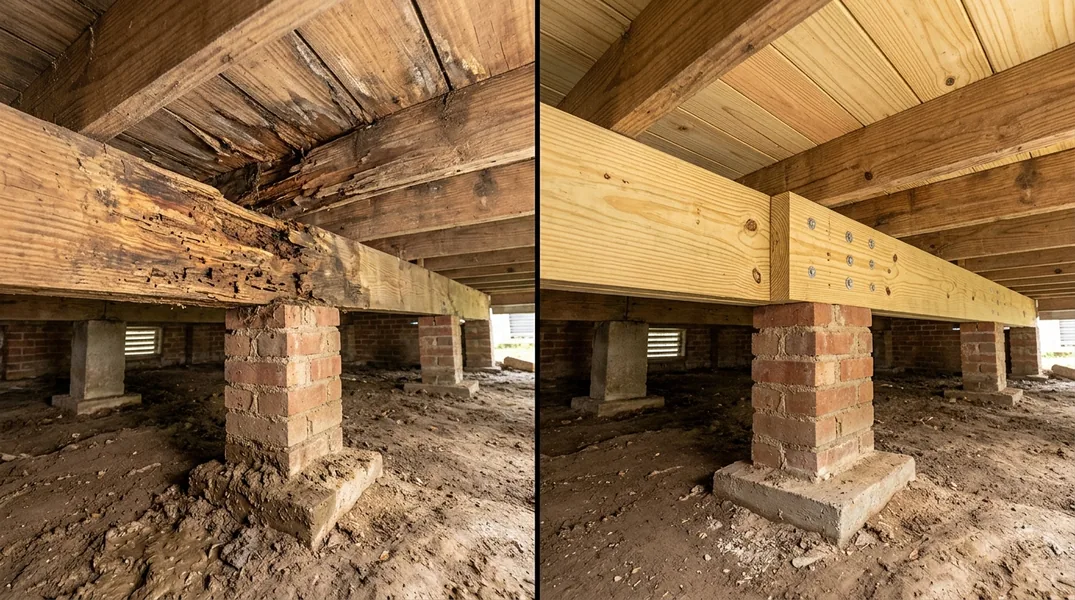
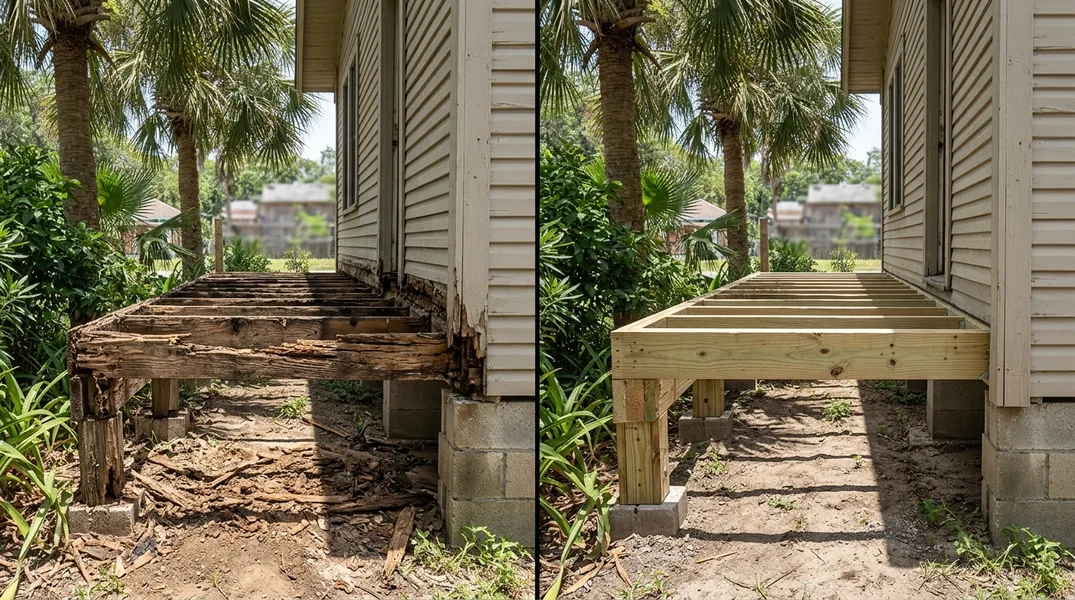
Wood fails in Brownsville for reasons rooted in the climate and the building stock itself. Dry rot is a fungus that needs sustained moisture rather than standing water. The humid subtropical air, the flat terrain, and the resacas that line the older neighborhoods keep wood damp year-round. Wet rot settles into sills, window frames, thresholds, and deck ledgers where water sits and does not dry. Termites and wood-boring beetles tunnel inside a beam or joist, hollowing it out while the paint film on the surface still looks sound. A floor that has gone soft or bouncy, a sill that gives under a prod, or fascia that has turned dark and spongy are all signs that the wood is failing. The only way to know what is really happening is to look.
We assess rot and insect damage by probing to find where sound wood begins, checking the framing behind the visible surface, and tracing the water path that fed the failure. A member that has lost its structural section gets replaced. Cosmetic surface decay on a sound member can be cut out and rebuilt in place. But filler over rot is not a repair. If the water source is not closed, the repair fails again. That is why the diagnosis comes first, and why an honest quote includes both the work and the reason for it. On termite and beetle damage, we work from your own pest inspection report. We repair and replace the damaged wood. We do not treat, fumigate, or perform pest control, which is a separate regulated trade. That distinction matters.
The cost of addressing rot or termite damage depends entirely on how much of the member is sound and whether the water can be stopped. A small section of sill plate that has rotted can often be sistered or rebuilt. A rim joist that has lost its bearing surface needs replacement. We quote the honest answer, not the dramatic one. Call (956) 431-0292 to have us look at it, or request a free inspection and we will explain what we find and what it will cost to address.
Structural Carpentry in Brownsville: Joists, Beams and Settling
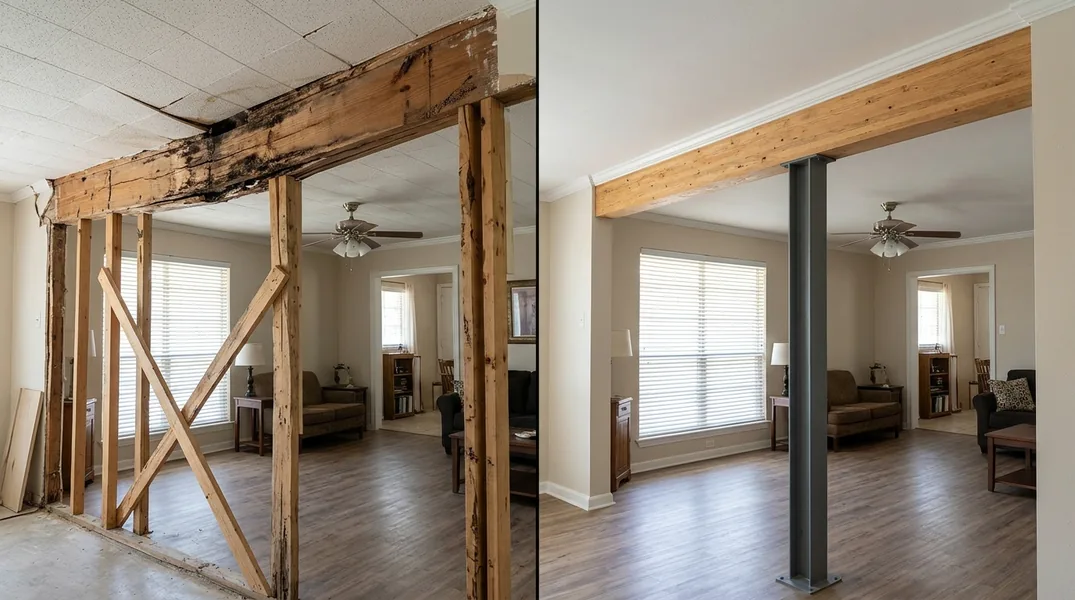
Structural carpentry in Brownsville means understanding how this building stock settles and moves. A house that has stood for a century here has settled slowly into the delta clay, and sloping floors and sticking doors are usually the normal condition rather than a sign of active failure. What matters is whether something is still moving, and how the member is doing where it bears weight. A floor joist that is sound except for a rotted section can be sistered, with a new joist bolted alongside it to restore the floor. A subfloor that has failed in one section can be replaced in place. A sill plate that has decayed can be rebuilt or replaced. But when a beam has lost its section or a rim joist is no longer carrying its load, replacement is the answer. Floor joist and subfloor repair is routine here, and we read each case on its own facts.
Larger work like beam replacement or load-bearing wall removal commonly requires engineered drawings from a licensed structural engineer and a permit from the local building department. We build to those drawings rather than produce them. Beam sizing, load paths, and the calculations that make a wall safe to remove are structural engineering work, not carpentry. We are the carpenters who build what the engineer designs. That partnership ensures the work is both sound and compliant with local code.
Finish Carpentry and Built-Ins in Brownsville Homes
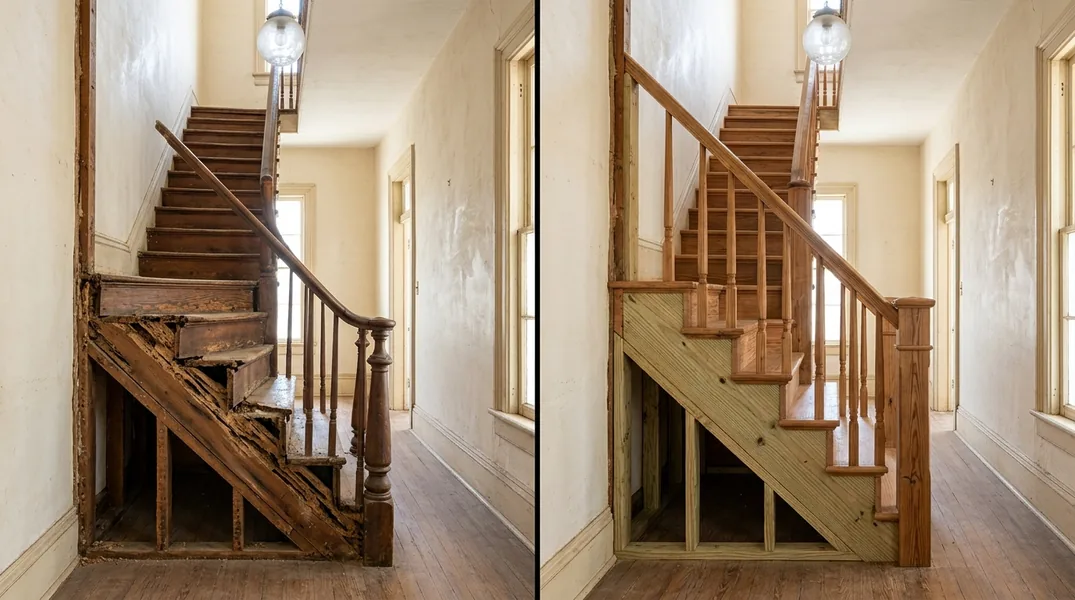
Finish carpentry in Brownsville is about craft and fit. The houses here have character: bay windows, compact floor plans, out-of-square openings, and original millwork that tells the story of when it was built. We install casing, baseboard, and crown molding with coped joints instead of caulked corners, scribing to walls that are neither flat nor plumb, and consistent reveals that make the work look built rather than assembled. When a door jamb needs repair or a staircase needs new treads and balusters, we match the profile and proportion of what was there. Custom custom built-ins and shelving are designed to fit the room and the house, not the other way around. Crown molding and baseboard installation, cabinet and vanity installation, and interior door installation and repair all follow the same principle: measure twice, cut once, and make it look like it belongs in this house.
We also handle exterior and entry door installation, stair and railing repair, and deck and porch repair, where the same care applies. A porch that has settled or a deck ledger that has rotted needs to be repaired right, not quickly. An entry door that sticks because the jamb has twisted needs to be shimmed and plumbed, not forced. The work is visible and lived with every day, so it has to be honest.
Permits, Repair-or-Replace & What We Do Not Do
Permits are a practical matter in Brownsville. A permit is commonly required for structural work such as removing or altering a load-bearing wall, replacing beams or floor joists, and altering stairs or exterior decks, but requirements and thresholds vary. In most jurisdictions, cosmetic repairs and finish carpentry do not require a permit, while work that affects the structure or the safety of the building does. The only way to know for certain is to ask. Before you start any project, verify the requirements with the Brownsville building department. They will tell you what applies to your house and your work.
On the question of repair versus replacement, the answer turns on three facts: how much sound wood is left in the member, whether the water source can be closed, and what the two approaches cost. We quote both when both are real options, and we explain the trade-off. If repair will hold for the life of the house and costs less, we say so. If the member has lost too much section or the water will come back, replacement is the honest answer. We are fully insured and can help you document the damage for an insurance claim, but coverage and deductibles are between you and your carrier. Requirements vary, and so do the rules about what work needs an engineer's sign-off. Always verify with the Brownsville building department before starting your project.