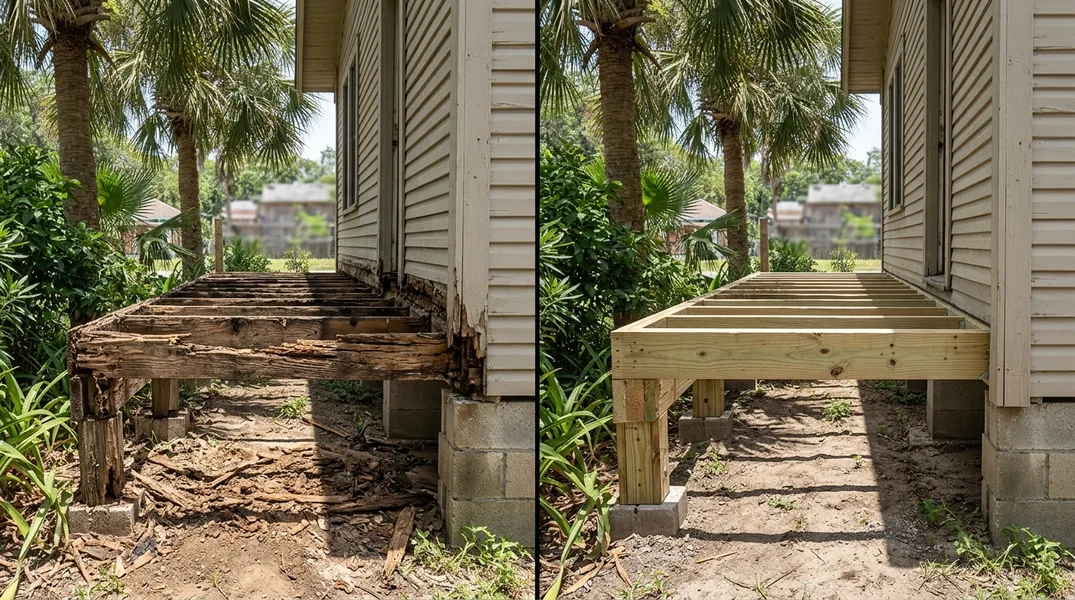
Drywood vs Subterranean Termites: Key Differences
If you suspect something is eating away at your Brownsville home's wooden structure, your first step should be identifying whether you're dealing with drywood termites, subterranean termites, or wood rot altogether. These three problems require completely different treatment approaches, and misidentifying the culprit can waste time and money while damage worsens.
Drywood termites and subterranean termites are both destructive pests, but they behave very differently. Subterranean termites live in soil and require constant moisture to survive. They build mud tubes from the ground up to reach wood, creating visible highways along your foundation and walls. These termites are the most common species in the United States and tend to cause widespread damage quickly because they work in large colonies. Drywood termites, by contrast, live directly inside the wood they consume. They don't need soil contact or high moisture levels, making them harder to detect until significant damage has occurred. In the Brownsville area, both species can pose serious threats to homeowners, particularly in older structures or properties with poor wood maintenance.
Identifying Termite Frass and Other Telltale Signs
One of the most reliable indicators of drywood termite activity is the presence of termite frass, which is simply termite droppings. Drywood termites push their fecal pellets out of their galleries (tunnels) through small holes in the wood surface. These pellets are tiny, typically the size of a grain of sand, and they accumulate in small piles beneath infested wood. The color of termite frass usually ranges from light tan to dark brown, depending on the wood being consumed. If you notice small piles of sawdust-like material near baseboards, window frames, or attic beams, this could be a sign of drywood termite activity. Unlike subterranean termites, which leave mud tubes, drywood termites leave these distinctive frass piles as their calling card.
Subterranean termites create different evidence. Look for mud tubes running along your foundation, inside crawl spaces, or up exterior walls. These tubes serve as protected highways for termites to travel between their underground colonies and the wood they're consuming. You might also notice blistered or bubbling paint on wood surfaces, which occurs when subterranean termites eat the wood beneath the paint layer. Additionally, subterranean termites often create hollow-sounding wood with thin outer shells, as they eat from the inside out. If you tap on suspected wood and it sounds papery or hollow, subterranean termite damage is a strong possibility. Both types of termite damage warrant professional Termite Damage Repair to ensure the structural integrity of your home.
Wood Rot vs Termite Damage: How to Tell the Difference
Homeowners often confuse wood rot with termite damage because both compromise wood integrity, but they have entirely different causes and require different solutions. Wood rot is caused by fungal decay, typically triggered by excessive moisture. When wood stays damp for extended periods, fungi colonize the wood fibers and break them down, creating soft, crumbly, or spongy wood that darkens in color. Wood rot vs termite damage can usually be distinguished by examining the wood's texture and the pattern of damage. Rotted wood tends to have a softer, more uniform decay pattern, whereas termite damage creates distinct tunnels or galleries through the wood. Termites are organized eaters that follow the grain, while rot spreads more randomly throughout affected areas.
Another key difference is moisture dependency. Wood rot requires constant moisture to develop and spread, so you'll typically find it in areas prone to water intrusion, such as around rooflines, under sinks, near plumbing, or in crawl spaces. Termites, especially drywood termites, don't need the same level of moisture and can thrive in drier conditions. If you discover damaged wood in a dry location far from any water source, termites are more likely the culprit. Additionally, wood rot often produces a musty odor and may show visible fungal growth or discoloration, whereas termite-infested wood typically appears intact on the surface until damage is severe. Whether you're dealing with Wood Rot & Dry Rot Repair or termite destruction, professional assessment is essential to determine the best course of action.
Signs of Termite Damage in Wood: What to Look For
Beyond termite frass and mud tubes, there are several other signs of termite damage in wood that homeowners should monitor. One common indicator is the presence of swarmers, which are winged termites that emerge during mating season, typically in spring or early summer. If you see flying insects around your home during these months, especially in large numbers, this could signal an active termite colony nearby. Swarmers often leave behind their wings after mating, so you might find discarded wings on windowsills or near light sources. Another warning sign is wood that sounds hollow when tapped with a hammer or screwdriver. Termites eat wood from the inside out, leaving a thin outer shell that collapses easily under pressure. You may also notice tight-fitting doors or windows that suddenly stick or jam, as termite damage can cause wood to warp and shift. Sagging floors or ceilings can indicate structural damage from large termite colonies, particularly in Brownsville homes with older framing systems.
Pay special attention to areas where wood contacts soil or where moisture tends to accumulate. Foundation walls, basement joists, crawl space beams, and wood near gutters and downspouts are prime termite targets. If you notice unexplained damage to wooden trim, siding, or structural elements in these zones, schedule a professional inspection immediately. Early detection can prevent costly structural repairs. Many homeowners also observe small exit holes in wood surfaces, which are the openings drywood termites use to expel frass. These holes are typically about 1/16 inch in diameter and may be surrounded by tiny piles of pellets. If you spot any combination of these signs, don't delay in seeking professional help to prevent further damage to your property.
When to Call a Professional for Termite or Wood Rot Damage
While some homeowners attempt DIY inspections, accurately diagnosing and treating termite infestations or wood rot requires professional expertise. The structural consequences of misidentifying the problem can be severe and expensive. If you suspect termites or wood rot in your Brownsville home, contacting a qualified carpentry and damage repair specialist is the safest approach. Professionals can perform thorough inspections, identify the specific pest or fungal issue, assess the extent of damage, and recommend the most effective treatment and repair strategy. They can also evaluate whether structural elements like floor joists, beams, or load-bearing walls have been compromised and require replacement.
Brownsville Carpentry specializes in identifying and repairing both termite damage and wood rot throughout the region. Our team can help you understand whether you're dealing with drywood termites, subterranean termites, or fungal decay, and we can provide expert Floor Joist & Subfloor Repair or Beam Replacement & Load-Bearing Wall Removal as needed. Don't let wood-destroying pests or decay compromise your home's safety and value. Contact us today at (956) 431-0292 for a free estimate and take the first step toward protecting your property.
Looking for a professional carpentry contractor in Brownsville? Brownsville Carpentry responds fast for all your carpentry needs.
Get a Free QuoteOur services: Wood Rot & Dry Rot Repair · Termite Damage Repair · Floor Joist & Subfloor Repair