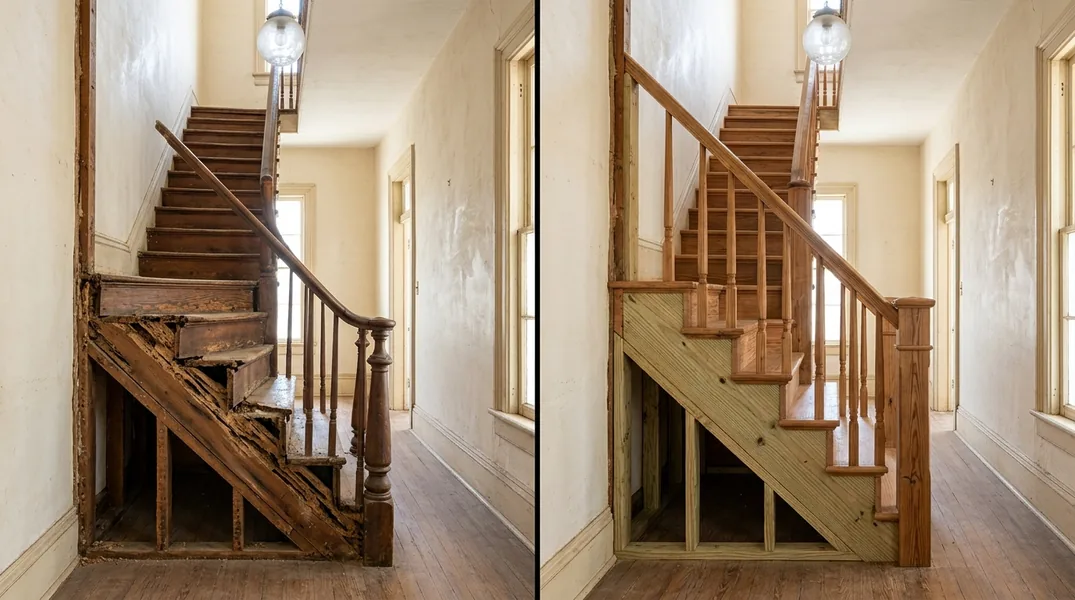
The Rot Reality: Why Brownsville Homes Face Wood Damage
The Rio Grande Valley's warm, humid climate is ideal for many things, but unfortunately, it's also perfect for wood rot and termite damage. Homeowners throughout Brownsville and surrounding areas like Harlingen and San Benito face constant moisture challenges that accelerate wood decay. The combination of seasonal flooding, high humidity, and occasional water intrusion creates the perfect storm for structural wood problems.
Whether you're dealing with dry rot creeping through your attic, wet rot softening your siding, or termite-damaged framing, the question that keeps homeowners up at night is simple: do I need to repair this wood, or should I replace it entirely? The answer isn't always straightforward, and making the wrong choice can cost thousands of dollars or compromise your home's structural integrity. That's why understanding your options before calling a contractor is crucial.
Repair Rotted Wood Without Replacing: When It's Actually Possible
The good news is that not every instance of wood rot requires complete replacement. In many cases, you can repair rotted wood without replacing the entire section, especially if the damage is caught early and remains surface-level. Surface rot, which affects only the outer layer of wood, can often be treated with specialized epoxy fillers and wood consolidants that restore structural integrity without tearing out the affected member.
Early-stage rot is typically characterized by discoloration, soft spots that yield to a screwdriver, and a musty odor. If you press a flathead screwdriver into the wood and it penetrates only a quarter-inch or so before hitting solid wood, you're likely looking at a repair situation rather than a replacement. Professional carpenters can remove the compromised outer wood, treat the area with fungicide, and reinforce it with epoxy or specialized wood hardeners. This approach preserves the original structure, maintains your home's character, and costs significantly less than full replacement.
However, this approach has limits. If rot has penetrated deep into the wood's core, if multiple structural members are affected, or if the damage affects load-bearing elements, repair alone may not be safe or code-compliant. This is where professional assessment becomes invaluable.
Termite Damaged Wood Repair: Structural Concerns You Can't Ignore
Termite damage repair presents a different challenge than wood rot because termites don't just weaken the surface; they tunnel through the interior of wood members, creating hidden voids that compromise structural capacity. A beam that looks solid from the outside might be hollowed out inside, unable to support the weight it's meant to carry. This hidden damage makes termite-affected wood particularly dangerous.
When termites have infested wood, the repair decision depends on the extent of tunneling and the wood member's role in your home's structure. Non-load-bearing trim and siding might be repairable if damage is limited, but load-bearing posts, beams, and floor joists almost always require replacement. The risk of structural failure, settling, or collapse is simply too great to gamble with repair-only solutions. Additionally, before any repair or replacement work begins, you'll need to address the termite infestation itself with professional pest control.
The silver lining: once termites are eliminated and structural repairs are complete, preventive treatments can protect your home from future infestations. Many homeowners in the Rio Grande Valley find that combining professional termite damage repair with ongoing pest prevention creates long-term peace of mind.
Replace Rotted Wood Siding: When Cosmetics Meet Structural Integrity
Rotted siding is one of the most common wood damage issues homeowners face, and the decision to repair or replace depends on several factors. If rot is limited to a few boards and hasn't penetrated to the house wrap or sheathing beneath, you can often replace rotted wood siding section by section without re-siding your entire home. This targeted approach saves money while addressing the problem.
However, if rot has spread across multiple sections, has reached the underlying sheathing, or if moisture intrusion is ongoing, partial replacement becomes impractical. Water that's already gotten behind your siding indicates a larger moisture control problem that won't be solved by replacing just the visible boards. In these cases, removing and replacing a larger section of siding, along with addressing the underlying moisture source, is the only way to prevent the problem from recurring. This might mean replacing siding on an entire wall or section rather than just a few boards.
The visual impact also matters. If your home has original wood siding with character and craftsmanship, preserving and repairing those boards makes sense both financially and aesthetically. But if you're already planning to update your home's exterior, using rot as an opportunity to upgrade to more durable materials like fiber cement, composite, or vinyl might be the smartest long-term investment.
Wood Rot Repair Cost in Brownsville: What to Budget
Understanding pricing for wood rot repair helps you make informed decisions. Simple surface rot repair on trim or siding might cost between $300 and $800, while more extensive repairs affecting larger structural areas can range from $1,500 to $5,000 or more. Full replacement of rotted sections naturally costs more, sometimes reaching $8,000 to $15,000 depending on the area affected and the wood type involved.
Several factors influence your final cost. The location of the damage matters significantly; attic rot is easier to access than rot hidden within walls, affecting labor time and expense. The type of wood also plays a role; specialty woods or trim that must match existing materials cost more than standard framing lumber. Additionally, if the damage has affected floor joists and subfloors or load-bearing elements like beams, the complexity and cost increase substantially.
Rather than guessing at costs, the best approach is to contact Brownsville Carpentry for a free estimate. Our team can assess the damage, determine whether repair or replacement makes sense, and provide transparent pricing before any work begins. Call us at (956) 431-0292 to schedule your inspection.
Making Your Decision: Repair vs. Replace
So how do you actually decide? Start with these key questions. First, is the damage structural or cosmetic? Load-bearing elements almost always need replacement; non-structural trim might be repairable. Second, how extensive is the damage? Surface-level rot affecting less than 10 percent of a member is often repairable; deep damage affecting 25 percent or more usually requires replacement. Third, is moisture still entering the wood? If yes, repair alone won't solve the problem; you must address the source.
Fourth, what's the cost difference? Sometimes repair and replacement are surprisingly close in price once labor is factored in. Getting competing estimates helps clarify your options. Finally, consider the long-term outlook. Repair might save money today but lead to repeated problems if conditions haven't improved. Replacement costs more upfront but provides confidence and durability for years to come.
Professional assessment is invaluable here. When you're unsure, calling Brownsville Carpentry for a detailed inspection removes guesswork from the equation. Our experienced team has handled thousands of rot and termite damage cases throughout the Rio Grande Valley and can recommend the most cost-effective, safe solution for your specific situation. Whether your home needs beam replacement and load-bearing wall removal or targeted surface repairs, we provide honest guidance and quality workmanship. Contact us today at (956) 431-0292 or visit our website to request your free estimate.
Looking for a professional carpentry contractor in Brownsville? Brownsville Carpentry responds fast for all your carpentry needs.
Get a Free QuoteOur services: Wood Rot & Dry Rot Repair · Termite Damage Repair · Floor Joist & Subfloor Repair