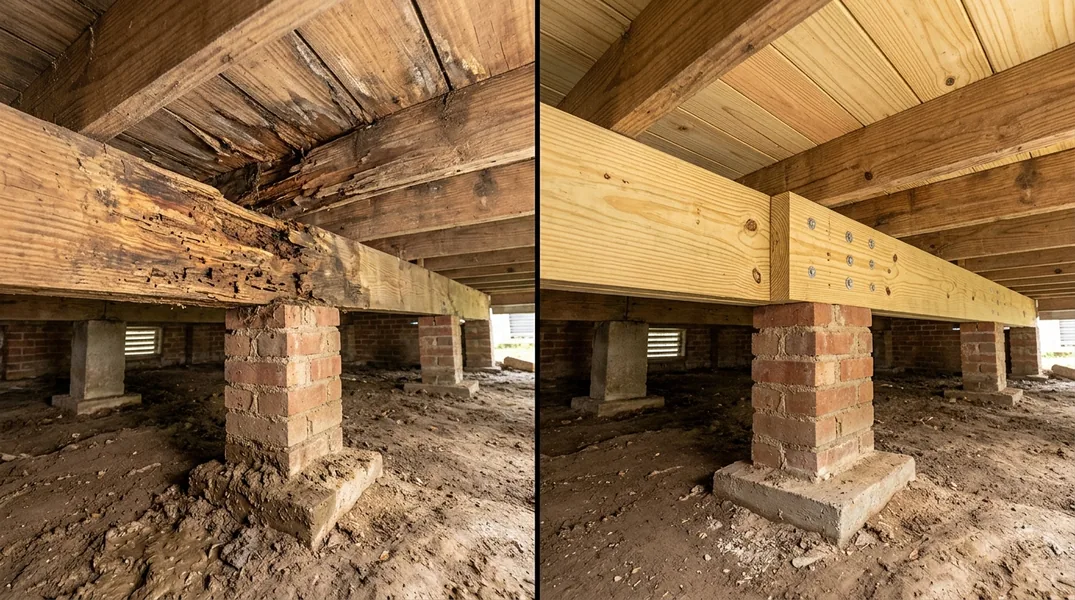
Why Is My Floor Sagging? The Brownsville Foundation Problem
If you own an older home in Brownsville, you've likely noticed that certain rooms feel slightly tilted or that hardwood floors dip in the middle of a room. This isn't just cosmetic. A sagging floor is your home's way of telling you that something structural needs attention, and in the Rio Grande Valley, the culprit is almost always the foundation.
Most older Brownsville homes were built on pier-and-beam foundations, which sit above the ground on concrete piers and wooden or steel beams. This design made sense decades ago, offering flexibility and easier access to plumbing and electrical systems. However, the delta clay soil that dominates our region expands and contracts dramatically with moisture changes. When clay dries, it shrinks and pulls away from foundation piers. When it rains (and it does in South Texas), the clay swells and shifts. Over decades, these cycles cause piers to settle unevenly, beams to sag, and floors to follow suit.
Delta Clay and Pier-and-Beam Floor Repair: Understanding Your Foundation
The delta clay found throughout the Rio Grande Valley is notoriously problematic for older foundations. Unlike sandy or rocky soil that stays relatively stable, clay is highly reactive. It can expand up to 10 percent when wet and shrink just as dramatically when dry. This movement is relentless and cumulative. A pier-and-beam foundation, while well-intentioned, is especially vulnerable because the piers sit on top of this shifting soil, and they have nothing to anchor them in place permanently.
When piers settle unevenly, the beams they support no longer sit level. The floor joists attached to those beams begin to sag, and the entire floor system develops a slope. You'll notice this most obviously in doorways (doors that swing open or closed on their own) and in how furniture or marbles roll across the floor. In severe cases, you might hear creaking sounds as the structure shifts, or you might see visible gaps opening up between the walls and floor trim. This isn't just annoying; it's a sign that your home's structural integrity is compromised, and the longer you wait, the more expensive the repair becomes.
Sistering Floor Joists: A Common Repair Approach
One of the most effective methods for addressing sagging floors is sistering floor joists. This technique involves installing new joists alongside damaged or weakened existing joists, essentially doubling the support in that section of the floor. The new joist (called a sister) is bolted or screwed to the existing joist, and together they distribute the load more evenly and prevent further sagging.
Sistering works best when the underlying foundation problem has been stabilized. If the piers are still settling or shifting, sistering alone won't solve the problem permanently. However, when combined with proper foundation support, sistering can restore the floor to level or near-level and eliminate bouncy, squeaky floors. This repair is less invasive than full Beam Replacement & Load-Bearing Wall Removal and often costs significantly less, making it an attractive option for homeowners on a budget. That said, the scope of work depends entirely on how much of your floor system is affected and what's causing the sag in the first place.
Wood Rot and Termite Damage: Hidden Causes of Sagging Floors
While foundation settlement is the most common cause of sagging floors in older Brownsville homes, don't overlook wood rot and termite damage. In our humid climate, moisture constantly threatens wooden beams and joists. If water pools under the house or if the crawlspace isn't properly ventilated, wood rot can develop silently, weakening the structural members that hold your floor up. Similarly, termites are a persistent threat in South Texas and can hollow out joists and beams from the inside, leaving them structurally useless even if they look solid on the surface.
If your floor is sagging and you suspect Wood Rot & Dry Rot Repair or termite activity, a professional inspection is essential. A carpenter can probe the wood with a tool to check for soft spots, look for mud tubes (a sign of termites), and identify areas of active decay. Once the extent of damage is known, repairs might involve sistering joists, replacing damaged sections, or in severe cases, full Floor Joist & Subfloor Repair. Addressing these issues early prevents them from spreading and keeps your repair costs manageable.
Sagging Floor Repair Cost in Brownsville: What to Budget
The cost of repairing a sagging floor varies widely depending on the root cause and the extent of damage. A simple sistering project affecting a few joists in one room might run anywhere from $800 to $2,500, while full foundation underpinning or beam replacement can easily exceed $10,000 or more. In Brownsville, where pier-and-beam foundations are standard, many contractors have experience with these repairs and can offer competitive rates.
The best way to understand your costs is to get a professional assessment. A structural engineer or experienced carpenter can identify exactly what's causing the sag and recommend the most cost-effective solution. Some repairs can be phased over time if budget is a concern, though delaying structural repairs often makes them more expensive in the long run. For a detailed breakdown of what your specific repair might cost, reach out to Brownsville Carpentry for a free estimate. You can also call us at (956) 431-0292 to discuss your situation and get preliminary guidance.
When to Call a Professional: Don't Wait on Sagging Floors
If you're noticing a sagging floor, the time to act is now. Small sags that seem minor can worsen quickly, especially in our climate where seasonal moisture changes stress the foundation continuously. A floor that's off by half an inch today might be off by two inches in five years, and the structural damage compounds as the problem progresses. Cracks in drywall, sticking doors and windows, and gaps in trim are all red flags that your floor system is under stress.
Brownsville Carpentry specializes in diagnosing and repairing sagging floors caused by foundation settlement, wood rot, and termite damage. We understand the unique challenges that pier-and-beam foundations face in the Rio Grande Valley, and we know how to fix them right. Whether you need sistering, beam replacement, or full foundation repair, we have the expertise to restore your home's structural integrity. Contact us today at (956) 431-0292 or visit our website to request a free estimate. The sooner you address the problem, the sooner your home will be safe, level, and solid underfoot.
Looking for a professional carpentry contractor in Brownsville? Brownsville Carpentry responds fast for all your carpentry needs.
Get a Free QuoteOur services: Wood Rot & Dry Rot Repair · Termite Damage Repair · Floor Joist & Subfloor Repair