The Brownsville Climate: Why Your Doors Won't Close Properly
If you live in Brownsville, you know our climate is unique. The Rio Grande Valley sits in a subtropical zone with high humidity levels year-round, especially during summer months. This constant moisture in the air affects the wood in your home in ways many homeowners don't realize. Wood naturally expands when it absorbs moisture and contracts when it dries out, and in Brownsville, that cycle happens repeatedly throughout the year.
Your door frames, doors themselves, and the surrounding trim are all made of wood (or contain wood components), making them particularly vulnerable to humidity-related swelling. When a door won't close properly, the first thing to check is whether the frame has warped or the door has expanded. This is often the simplest explanation, and it's also one of the most common reasons homeowners call for help. The wood swells just enough that the door no longer fits snugly in its frame, creating friction and that frustrating sticking sensation when you try to open or close it.
House Settling on Clay Soil: A Brownsville-Specific Problem
The Rio Grande Valley's soil composition plays a major role in home structural issues. Much of the area sits on clay soil, which behaves very differently from sandy or rocky soil found in other parts of Texas. Clay soil expands when wet and contracts when dry, and this movement directly affects your home's foundation and framing. Over time, this constant shifting causes houses to settle unevenly, and when your foundation moves, everything built on top of it moves too, including your door frames.
When a house settles on clay soil, door frames become misaligned. What was once a perfectly square opening becomes slightly trapezoid or diamond-shaped. A door that hung straight and closed smoothly suddenly binds at the top or bottom. Homeowners often describe this as a door that was fine for years and then suddenly started sticking for no obvious reason. In reality, the house has shifted beneath it. This is especially common in older homes that have been settling for decades, but it can happen in newer construction as well if the clay soil beneath the foundation is particularly active.
If you suspect foundation settling is causing your sticking doors, it's worth having a professional inspect not just the door, but the overall condition of your home's structure. Uneven settling can lead to more serious problems down the road, including cracks in drywall, gaps between walls and trim, and damage to other structural elements.
Termite Damaged Door Frames: A Hidden Threat
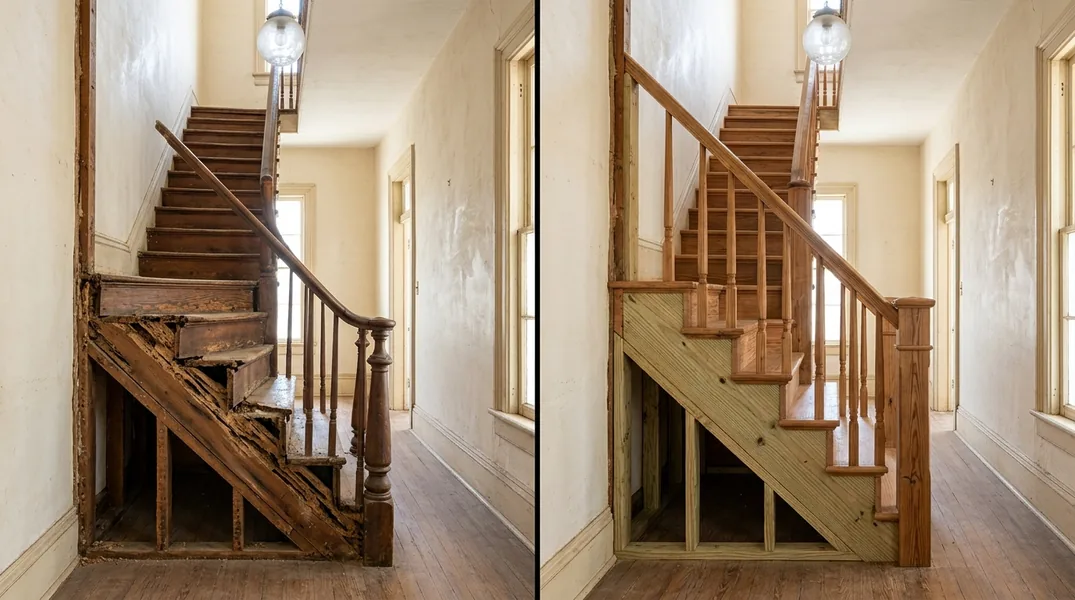
One of the most serious causes of sticking doors in Brownsville homes is termite damage. Termites are active year-round in our warm climate, and they love to eat wood from the inside out. A door frame that appears solid on the surface might be hollowed out internally, compromised by termite galleries that have weakened the wood's structural integrity. When a termite damaged door frame loses its strength, it can shift, warp, or collapse slightly, causing the door to bind.
The problem with termites is that damage often goes unnoticed until it's advanced. You might see a door sticking and assume it's just humidity or settling, when in fact termites have been working inside the frame for months or even years. By the time you notice the sticking, the damage may be extensive. This is why professional inspection is so important. A trained eye can spot signs of termite activity that homeowners miss: tiny holes in the wood, hollow-sounding areas, or mud tubes near the foundation.
If termite damage is the culprit, simply sanding down the door or adjusting the hinges won't solve the problem. You'll need Termite Damage Repair to replace the damaged frame and address any ongoing infestation. This is not a DIY project, and it's not something to delay. Termites continue to spread as long as they have access to wood, so prompt action is essential to protect the rest of your home.
How to Diagnose the Real Cause of Your Sticking Door
Before you panic or spend money on repairs, it helps to understand which of these three factors is actually causing your door problem. Start with the simplest observation: does the door stick in the same spot every time, or does it vary? If it sticks consistently at the top or bottom, misalignment from settling or warping is likely. If it sticks sporadically or the sticking seems to come and go with the seasons, humidity is probably the main culprit.
Next, inspect the door frame visually. Look for visible gaps between the frame and the wall, or between the door and the frame. Check whether the frame looks square by comparing the diagonal measurements from corner to corner (they should be equal). Press on the frame with your hand to see if it feels solid or if there's any give. If the frame feels soft, spongy, or if you can press your fingernail into the wood easily, termites may be responsible. You can also look for small holes (about the size of a pin) in the wood, which are a classic sign of termite activity.
If you're uncertain about what you're seeing, or if the problem seems serious, don't hesitate to call a professional. A carpenter experienced in wood damage can identify the cause quickly and recommend the right solution. This saves you time and money in the long run, because treating the wrong problem won't fix your door.
Wood Rot and Dry Rot Damage to Door Frames Near Me
While termites get a lot of attention, another common culprit behind sticking doors is wood rot or dry rot. In Brownsville's humid climate, wood rot thrives. Water leaks from the roof, poor drainage around the foundation, or even just chronic moisture exposure can cause wood to rot from the inside. Unlike termite damage, which is caused by insects, rot is simply wood that has decayed due to fungal growth and moisture.
Dry rot, despite its name, actually requires some moisture to develop. It's a specific type of fungal decay that can spread rapidly through wood, leaving it crumbly and weak. When a door frame suffers from wood rot or dry rot, it loses its structural strength just like termite-damaged wood does. The frame warps, shifts, or becomes too weak to hold the door properly, resulting in binding and sticking.
Wood Rot & Dry Rot Repair involves removing the damaged wood and replacing it with new, treated lumber. This is essential work because rot continues to spread as long as moisture is present. A professional carpenter will not only replace the damaged frame but also identify and address the moisture source that caused the rot in the first place. Otherwise, the rot will simply return.
When to Call Brownsville Carpentry for Professional Help
If your door is sticking slightly and it's clearly just a seasonal humidity issue, you might get by with minor adjustments like sanding the door edge or tightening hinges. But if the problem persists, worsens, or if you suspect structural issues like settling, termites, or rot, it's time to call a professional. Attempting major repairs without proper diagnosis can waste money and leave the underlying problem unaddressed.
At Brownsville Carpentry, we've spent years helping homeowners in the Rio Grande Valley solve wood damage problems. We understand the specific challenges posed by our climate, our clay soil, and our termite activity. Whether your sticking door is caused by humidity, settling, termites, or rot, we can identify the problem and provide a lasting solution. We'll inspect your door frame, explain what we find, and give you honest advice about what needs to be done.
Don't let a sticking door become a bigger problem. Reach out to us today at (956) 431-0292 or visit our website to request a free estimate. We serve Brownsville and the surrounding areas, and we're ready to help you get your doors working smoothly again.
Looking for a professional carpentry contractor in Brownsville? Brownsville Carpentry responds fast for all your carpentry needs.
Get a Free QuoteOur services: Wood Rot & Dry Rot Repair · Termite Damage Repair · Floor Joist & Subfloor Repair